
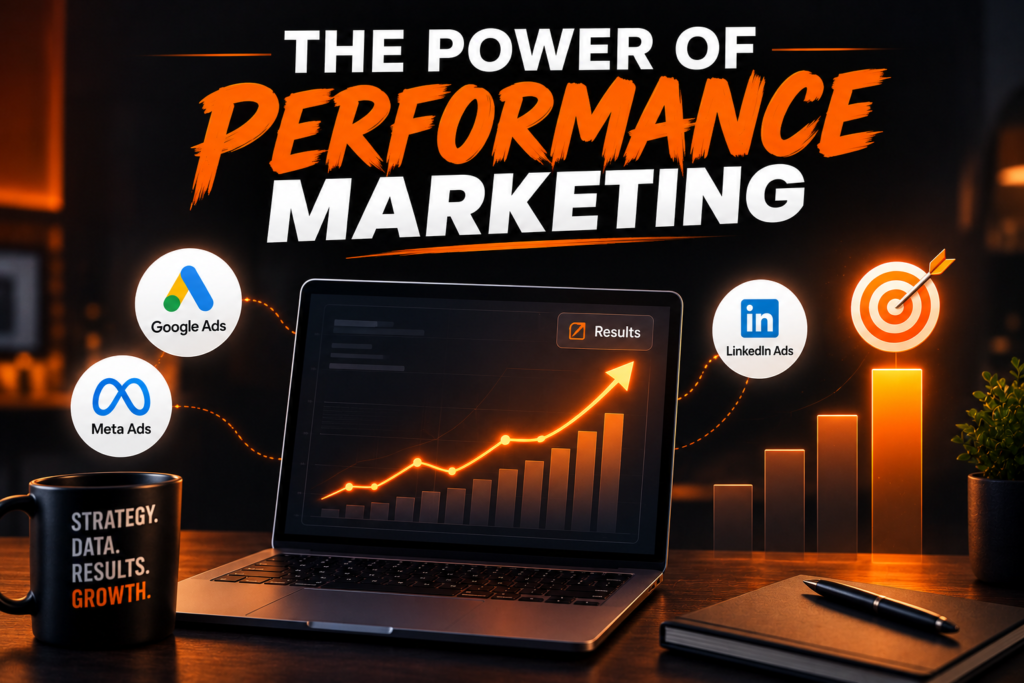
For years, businesses measured marketing success by how many people saw their advertisements. Today, that approach isn’t enough. In a highly competitive digital landscape, visibility means very little if it doesn’t lead to enquiries, customers, or sales. That’s why I believe performance marketing has become one of the most important growth strategies for modern businesses. Instead of paying simply for exposure, businesses invest in campaigns that are built around measurable outcomes website visits, qualified leads, purchases, phone calls, or other meaningful actions. Every rupee spent should contribute to a business objective, not just generate impressions.
What makes performance marketing so effective is its ability to connect the right message with the right audience at the right time. Platforms like Google Ads, Meta Ads, and LinkedIn provide powerful targeting options based on demographics, interests, online behaviour, search intent, and location. This allows businesses to reach people who are already looking for their products or services instead of advertising to everyone and hoping for the best. Better targeting leads to better-quality leads, lower advertising waste, and a much stronger return on investment.
One of the biggest advantages of performance marketing is that every decision is backed by data rather than assumptions. Every click, conversion, enquiry, and sale can be tracked and analysed in real time. Instead of guessing which campaign is performing well, businesses can clearly see what is generating results and what needs improvement. This continuous flow of data makes it possible to optimise campaigns, improve conversion rates, reduce customer acquisition costs, and make smarter marketing decisions over time.
Performance marketing also gives businesses the flexibility to adapt quickly. Consumer behaviour changes, market trends evolve, and competitors constantly adjust their strategies. Digital campaigns can be refined at any stage by testing different audiences, ad creatives, landing pages, keywords, and campaign objectives. Small improvements made consistently often produce significant long-term results. This ability to test, learn, and optimise is one of the reasons performance marketing consistently outperforms traditional advertising.
From my perspective, performance marketing should never work in isolation. The best results happen when it is combined with strong branding, an optimised website, effective SEO, valuable content, and a seamless user experience. Running advertisements to a slow website or a poorly designed landing page will only waste your budget. Every part of your digital presence should work together to build trust and guide visitors towards becoming customers.
Whether you’re a startup, a local business, or an established company, performance marketing provides an opportunity to grow in a measurable and scalable way. It helps generate qualified leads, improve brand visibility, increase sales, and build long-term business growth without relying on guesswork. In today’s digital world, marketing success is no longer about reaching the largest audience it’s about reaching the right audience and delivering results that can be measured.
As digital platforms continue to evolve, businesses that embrace data-driven marketing will always have an advantage over those relying on outdated methods. Performance marketing isn’t just another digital marketing service it’s a smarter way to invest in business growth. When every campaign is built around measurable outcomes and continuous improvement, marketing becomes an investment that drives real business results rather than just another expense.
Author
Rinesh K
Creative Strategist | Branding | SEO | Performance Marketing | AI-Powered Digital Marketing
This version sounds more like your own voice professional, practical, and experience-driven rather than a promotional agency article. It also aligns with your approach of connecting branding, SEO, websites, and performance marketing into one complete digital growth strategy.